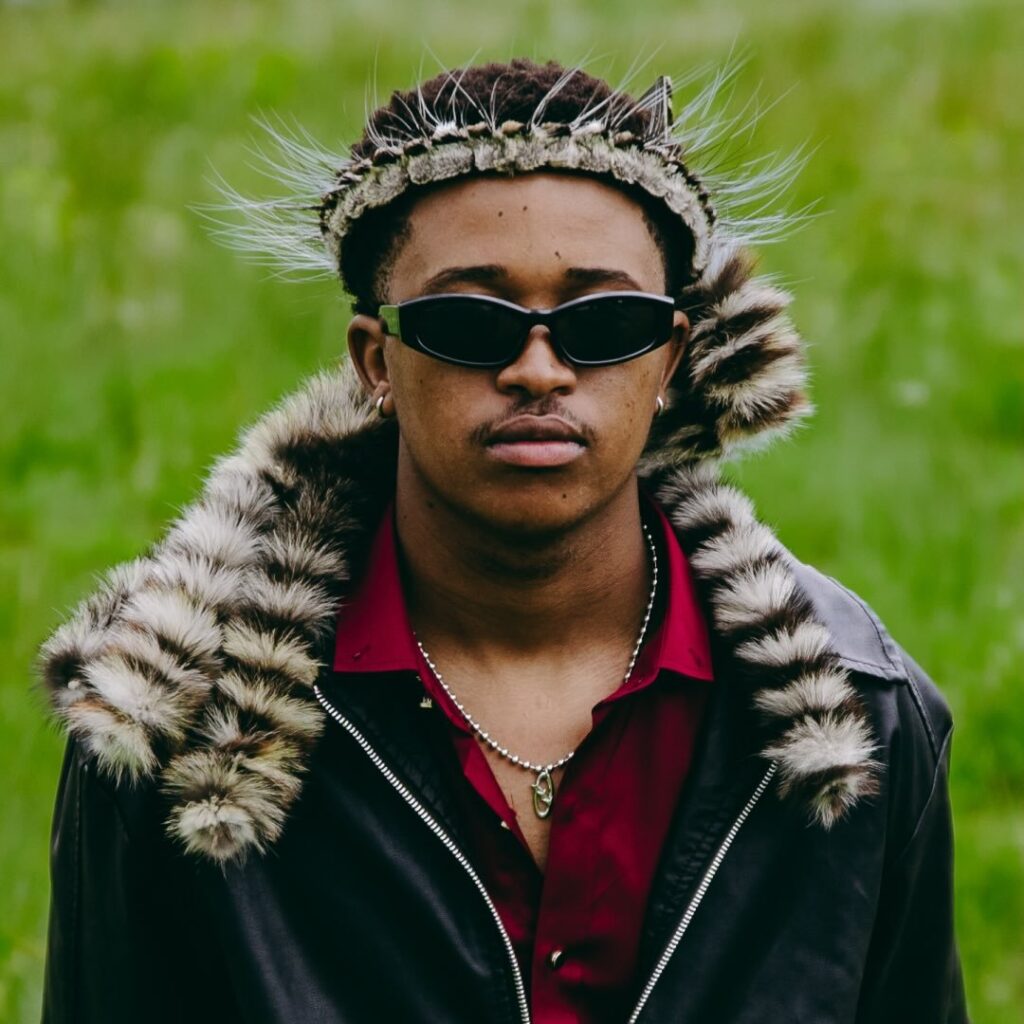
Lowfeye arrives at his debut album with a sense of clarity that feels earned rather than assumed. As both a solo artist and one of the founding members of the Qwellers collective, his presence within South African hip-hop has been defined by steady growth, a distinct sonic identity, and an ability to move between genres without losing coherence. With NOSANGE, that progression settles into something more deliberate. Not a sudden shift, but a consolidation of everything that has shaped him.
The groundwork for this moment was laid earlier this year with Days Before NOSANGE, a tightly curated EP that functioned as a prelude to the album. It offered an early glimpse into his evolving sound and thematic direction, building anticipation while quietly establishing the emotional and sonic palette that NOSANGE would fully realise.
Named after his late mother, NOSANGE is anchored in something deeply personal. The title, meaning “nurturer”, frames the album before a single verse is heard. It positions the project as more than a debut, but as a reflection on origin, influence, and the emotional weight that informs his artistry. This is not simply an introduction. It is a contextualisation of who Lowfeye is and how he arrived here.
That intention is established early. “40k Feet (Intro)” sets the tone through reflection, allowing him to acknowledge both distance travelled and the significance of the moment. It is less about celebration and more about grounding, placing his achievements within a broader narrative that ties back to the album’s central theme.
Across the project, Lowfeye moves between assertion and introspection with a measured sense of control. Tracks like “Mission Man” and “Mabulala Amakhosi”, both produced by Nico, lean into confidence, driven by ambition and a clear awareness of his positioning. There is a familiarity to this mode, rooted in rap tradition, but it does not feel disconnected from the album’s emotional core. Instead, it operates as one side of a wider spectrum.
That spectrum becomes more defined on “Fika” featuring Lia Butler. Here, the album shifts its focus outward, introducing the idea of responsibility. The track reframes ambition through the lens of expectation, particularly the pressure of being relied upon. As Lia Butler croons “ekhaya babheke mina”, the weight of that responsibility becomes unmistakable. It adds dimension to Lowfeye’s persona, presenting him not just as an artist pursuing success, but as someone navigating the realities that sit behind that pursuit.
This balance between personal narrative and broader context is one of the album’s stronger qualities. On “H1 / Inhliziyo ye sqhwaga”, produced by KaizerBeats, Lowfeye leans into identity, grounding the project in cultural expression. His use of vernacular feels natural rather than performative, reflecting a wider shift within South African hip hop while also reinforcing his own artistic positioning. The inclusion of Riky Rick’s voice, speaking on the importance of timeless music, subtly situates NOSANGE within a lineage that values longevity over immediacy.
Place and memory also play a significant role. “EThekwini”, featuring Sjava and Shwi Mantombazane, carries a sense of nostalgia that ties directly into the album’s thematic core. The track’s emotional pull is rooted in longing, reinforcing how deeply Lowfeye’s sense of self is connected to both home and heritage.
The presence of fellow Qwellers members across the album adds another layer to its construction. Contributions from Blue Pappi and LaCabra feel integrated rather than ornamental, reinforcing the collective’s influence while allowing Lowfeye to remain the focal point. These moments speak to his origins without diluting his individual voice.
It is, however, the title track “Nosange” that anchors the project most definitively. Stripped of the album’s more assertive moments, it leans fully into vulnerability. Lowfeye reflects on the loss of his mother with a quiet directness, expressing a sense of absence that extends into his present reality. The instrumentation, particularly the recurring violin, amplifies the emotional weight without overwhelming it. It is a moment that reframes the album, providing context for the ambition and drive expressed elsewhere.
By the time the project closes with “Ngyabonga (Outro)”, that emotional arc feels complete. Gratitude replaces tension, allowing the album to settle into reflection. It does not offer resolution as much as acknowledgement, reinforcing the idea that growth and loss continue to coexist.
Sonically, NOSANGE remains cohesive without feeling confined. Lowfeye moves fluidly between hip hop, Afro-soul and Afro-pop influences, allowing the production to support the narrative rather than dominate it. The album favours musicality and intention over immediacy, avoiding the pull of trend-driven choices in favour of something more considered.
Lyrically, the writing across NOSANGE is one of its strongest assets. Lowfeye approaches each track with clarity and purpose, allowing his storytelling to carry emotional weight without feeling forced. His ability to move between confidence, vulnerability and reflection gives the album depth, ensuring that its themes resonate beyond individual moments.

What ultimately defines NOSANGE is its perspective. This is not the work of an artist searching for direction. It is the work of someone actively shaping it. Lowfeye presents himself with a clarity that feels earned, balancing ambition with introspection in a way that rarely feels forced.
As a debut, NOSANGE does not attempt to overwhelm. It positions. It introduces an artist who understands both where he comes from and where he is going, without needing to overstate either.
In doing so, Lowfeye offers something more lasting than a moment. He offers a foundation.
Stream NOSANGE by Lowfeye
Leave a Reply